
Views: 0 Author: Site Editor Publish Time: 2026-11-18 Origin: Site


Specifying standard components for heavy-duty, thick-walled enclosures often introduces unexpected engineering friction. You might assume standard fittings work perfectly out of the box. However, inadequate thread engagement quickly compromises both mechanical stability and ingress protection (IP). Wall thickness typically becomes a serious problem when it exceeds the 4mm threshold. At this depth, standard parallel threads struggle to reach through the panel and secure properly on the other side. Relying on basic off-the-shelf parts for these rigorous industrial applications introduces unseen compliance failures and long-term safety risks. In this comprehensive guide, we will outline how to effectively evaluate thread length requirements for deeper panels. You will learn how to compare material viability, navigate complex international thread standards, and select the exact specifications for thick-wall applications. This proactive approach ensures robust environmental protection without unnecessarily over-engineering your final design.
Standard installation relies heavily on the thread passing entirely through the panel wall. The standard thread length on typical fittings measures between 8mm and 10mm. If your enclosure wall thickness exceeds 4mm, this short thread simply cannot protrude far enough into the interior space. Without enough exposed thread, a locknut cannot attach securely or grab enough threads to hold tension. This clearance hole dilemma leaves the entire fitting vulnerable to lateral pull-out forces. When cables are tugged or manipulated, the weak connection flexes and eventually breaks.
Thick enclosures are sometimes tapped to create internal threads directly within the wall. This approach theoretically eliminates the need for an internal locknut. However, utilizing short standard threads introduces a severe tapped hole risk. They often fail to provide the minimum number of engaged threads required by rigorous industry standards. Frameworks like EN 62444 mandate specific engagement depths to ensure mechanical retention, strain relief, and vibration resistance. Failing to meet these strict standards compromises the structural integrity of the entire cable management system.
Environmental sealing represents another critical, often overlooked failure point. Proper ingress protection requires compressing a base O-ring or sealing washer against the enclosure's exterior surface. If the thread is too short to allow the nut to tighten down completely, this vital seal fails. The fitting bottoms out before applying adequate pressure to the elastomer. This failure leaves microscopic gaps along the mating surface. Moisture, fine dust, and harsh industrial contaminants can easily bypass the barrier. Once inside, these elements quickly destroy sensitive electronic components, causing short circuits and catastrophic system failures. We must treat thread length as a vital sealing parameter rather than a secondary dimension.
Engineers need practical rules to evaluate these components efficiently. A reliable dimensional threshold helps prevent costly specification errors during the design phase. A simple formula dictates this: if your wall thickness plus the locknut thickness is greater than the standard thread length, you absolutely need an extended thread. Standard versions hover around 8mm to 10mm of usable length. Extended threads typically range from 12mm to over 15mm, providing the extra reach required for thick castings or double-walled panels.
You must also carefully distinguish between clearance entries and threaded entries when selecting parts.
Longer threads solve exterior sealing issues but introduce frustrating internal clearance constraints. Extended threads naturally protrude further into the enclosure interior. You must verify this extra length will not interfere with sensitive internal components. Check your spatial tolerances carefully using CAD models or physical measurements. An extended thread hitting a printed circuit board, obstructing complex wiring routes, or pressing directly against a DIN rail causes immediate assembly failures.
Standard vs. Extended Thread Evaluation Matrix
| Component Feature | Standard Thread Profile | Extended Thread Profile | Best Application Scenario |
|---|---|---|---|
| Typical Thread Length | 8mm – 10mm | 12mm – 15mm+ | Depends strictly on panel depth |
| Maximum Wall Thickness | Up to 4mm | 5mm to 10mm+ | Match directly to panel specifications |
| Internal Protrusion | Minimal spatial impact | Requires careful spatial verification | Watch for PCB or rail interference |
| Locknut Engagement | Excellent on thin sheet metal | Excellent on heavy metal castings | Crucial for preventing vibration loosening |
Material selection heavily influences how threads behave inside deep taps. Plastic-to-plastic applications differ significantly from metal-to-metal installations, demanding unique installation practices.
Nylon variants offer excellent corrosion resistance against common industrial chemicals and weather elements. They are highly cost-effective and ideal for thick polycarbonate, ABS, or fiberglass enclosures. However, they carry specific installation risks that installers must respect. Stripping or cross-threading becomes a major hazard if you forcefully drive nylon threads into deep, thick-walled tapped metal boxes. Mismatched material hardness often tears the softer plastic threads under rotational stress. Incorporating quality Nylon Cable Glands requires careful perpendicular alignment during assembly to prevent irreversible thread damage.
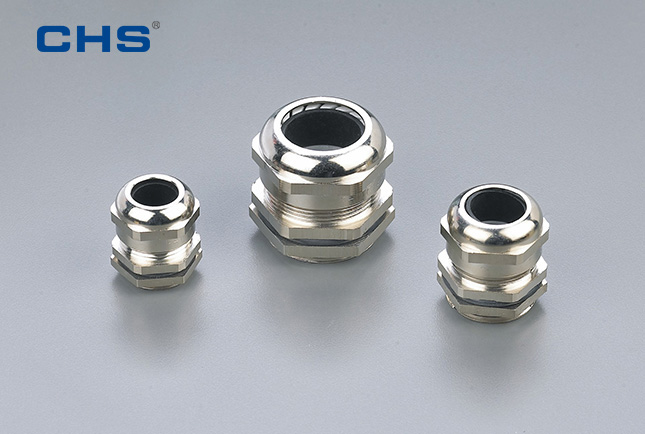
Heavy-duty industrial applications frequently demand resilient metal components. Nickel-plated brass provides superior mechanical strength for deep, high-torque thread engagement. This metallic strength prevents thread deformation even under extreme tightening forces. Brass variants are essential for heavy-duty cast aluminum or thick steel enclosures often found in mining, maritime, or automated manufacturing sectors. They also support critical electromagnetic compatibility (EMC) grounding requirements. When threaded directly into conductive thick-walled enclosures, they maintain seamless electrical continuity. Utilizing robust Brass Cable Glands ensures both uncompromising mechanical security and reliable electrical safety.
You must remain vigilant regarding galvanic corrosion when mixing materials. Mixing incompatible metals in moist, harsh environments leads to rapid electrolytic degradation. The less noble metal acts as an anode and quickly corrodes away. Always match brass components with compatible enclosure metals or proper plating finishes. If dissimilar metals must interact, consider using insulating isolation washers to break the conductive path and preserve the assembly's integrity over decades of continuous use.
Understanding specific thread types is crucial for successfully managing deep panel entries. ISO metric threads utilize a straight, parallel design. In thick walls, parallel threads rely entirely on the external base O-ring or flat washer to form a proper environmental seal. Since the thread diameter remains completely constant from top to bottom, tightening the fitting does not create a wedging effect. You can easily find "long thread" metric variants designed specifically to solve panel depth issues. For instance, an M20x1.5 specification is widely available with an extended 15mm thread length instead of the standard 9mm. Specifying the correct Metric Cable Glands ensures your parallel installations remain mechanically secure and environmentally sealed.
Panzergewinde (PG) threads share very similar mechanical traits. While they hold a legacy status in modern engineering and are slowly being phased out of new designs, they remain highly prevalent in older European machinery and replacement parts. PG threads are also inherently parallel. They face the exact same physical length limitations and sealing mechanics in thick walls as their modern metric counterparts. You must source extended PG variants if working with legacy heavy-wall equipment.
National Pipe Thread (NPT) operates on entirely different physical mechanics. NPT threads are deliberately tapered, meaning the outer diameter narrows slightly along the threaded shaft. They seal through pure mechanical friction and microscopic thread deformation as they wedge tightly into a tapped hole. They explicitly do not use a locknut or a base O-ring to prevent moisture ingress. This tapered design provides a massive engineering advantage for thick metal walls. You can tap the enclosure deeply and drive the tapered thread directly into the material. Engineers often apply PTFE tape or liquid thread sealants to NPT threads to guarantee a flawless moisture barrier. This creates a highly secure, liquid-tight seal. You never have to worry about through-wall protrusion lengths or measuring internal locknut clearances, vastly simplifying the design process for heavy castings.
Improper installation techniques quickly ruin perfectly specified components, rendering expensive hardware completely useless. Installers often face the dangerous temptation to overtighten standard glands to "make them fit" on borderline thick walls. This over-torquing crushes the elastomer O-ring excessively. It deforms the seal, pushes it out of its retaining groove, and permanently compromises environmental protection. Once deformed, the seal cannot recover its original shape.
Vibration loosening is another serious operational risk in industrial settings. For thick walls relying on extended threads and standard locknuts, standard nuts often back out slowly over time due to machine hum or transit vibrations. High-vibration environments demand better fastening solutions. We highly recommend using specialized vibration-resistant locknuts equipped with "biting" teeth or flanged serrations. These teeth dig firmly into the enclosure's interior surface, ensuring the assembly remains rigidly secure for the equipment's entire lifespan.
Never assume ingress protection is guaranteed automatically just because you purchased a highly rated component. The IP68 rating of any fitting remains valid only if the physical installation matches the manufacturer specifications precisely. This includes adhering strictly to specified torque values and ensuring adequate thread engagement depth.
Follow these practical best practices for flawless execution during your next panel build:
Thread length is never just a minor aesthetic choice or an afterthought in panel design. It serves as a strict mechanical and compliance necessity for thick-walled enclosures. Ignoring this fundamental engineering reality invites catastrophic moisture ingress, structural mechanical failure, and severe potential safety hazards. By respecting physical tolerances, you avoid unnecessary rework and warranty claims.
Your shortlisting logic should always remain methodical and data-driven. Measure your exact wall thickness first with precision calipers. Determine definitively whether your specific entry point requires a smooth clearance hole or a tapped internal thread. Calculate your available internal clearance carefully to avoid costly redesigns on the assembly line. Only after completing these vital steps should you choose between standard parallel, extended parallel, or tapered NPT solutions.
Take proactive, practical next steps to ensure absolute compatibility. Consult manufacturer technical datasheets closely. Look specifically for thread length dimensions, which are often clearly denoted as "TL" or "GL" in detailed specification tables. Always request physical product samples to perform rigorous fitment testing before committing to large bulk orders. This hands-on validation guarantees a perfect, watertight fit for your specialized enclosures. Ensure your valuable internal systems are securely protected by comprehensively evaluating all available Cable Glands tailored specifically to your precise application depth.
A: Industry norms generally require a minimum of five full threads engaged for parallel threads installed in tapped holes. This minimum engagement ensures adequate mechanical stability and strong vibration resistance. However, specific standards may vary based on the application and the required ingress protection level.
A: Standard metric threads typically measure around 8mm to 9mm in length. A 5mm wall leaves insufficient room for a standard locknut to engage fully on the interior side. For this thickness, an extended thread is highly recommended to ensure a secure, compliant installation.
A: No. NPT threads feature a specialized tapered design. They thread directly into a tapped hole and seal naturally through friction and thread deformation. This creates a secure, liquid-tight connection without ever needing a locknut or an external base O-ring.
A: Yes, long-thread variants are widely available across multiple materials. You can source them in both nylon for lightweight, corrosion-resistant applications and durable brass for heavy-duty, metal-to-metal industrial environments. Choose the material that best matches your overall enclosure specifications.

