
Views: 0 Author: Site Editor Publish Time: 2026-11-15 Origin: Site


Establishing a secure enclosure entry remains a critical point of failure in electrical engineering. A compromised entry point immediately degrades your entire system's Ingress Protection (IP) rating. Engineers constantly face a difficult structural dilemma. You must decide whether to route cables directly into an enclosure or run them through robust protective conduit systems. This crucial decision directly impacts localized strain relief, environmental sealing, and long-term maintenance accessibility. We built this guide to provide an objective breakdown of enclosure entry methods. You will learn exactly when to specify direct entry components versus conduit-based alternatives. We will thoroughly evaluate material constraints, navigate daily installation realities, and examine strict compliance requirements. By the end, you will know how to protect your sensitive internal terminations against harsh industrial environments without accidentally over-engineering your initial setup.
You cannot ignore the operational costs associated with enclosure entry failures. Moisture ingress causes catastrophic short circuits across sensitive logic boards. Constant machine vibration shakes loose internal terminal blocks if cables lack proper external support. Every unsealed gap threatens your entire control panel. Dust accumulation alone can bridge contact points and trigger dangerous thermal events. Therefore, engineering a secure transition from the outside world into a control box requires serious attention.
To solve this, we must distinguish direct entry from conduit routing. Direct entry architecture relies entirely on the cable's own external jacket for protection leading up to the enclosure. This approach works perfectly for static, sheltered cable runs. Conversely, conduit routing encases the wire completely inside protective tubing. You shield the lines right up to the enclosure wall, making it ideal for hazardous manufacturing floors.
You must adopt system-level thinking when designing these transitions. An enclosure is truly only as strong as its weakest hole. Upgrading your facility to an IP68-rated stainless steel cabinet means nothing if you install cheap, IP54-rated entry fittings. Water always finds the path of least resistance.
Finally, we must recognize the valuable role of gland plates. These removable metal or plastic plates let you punch multiple entry holes without drilling into the primary enclosure body. You gain massive flexibility for future equipment expansions. Furthermore, technicians can swap out entry configurations quickly without leaving permanent, unsealable holes in the main cabinet structure.
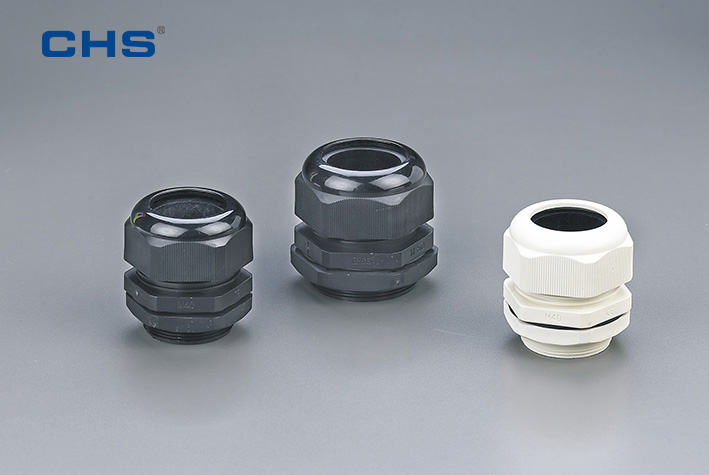
These specialized entry components serve three vital mechanical functions simultaneously. First, they secure the incoming cable physically to prevent pull-out. Second, they provide essential localized strain relief. Third, they create a static environmental seal against ambient dust and water. Without proper strain relief, heavy cable weight pulls directly on delicate internal terminations. Over time, those internal copper connections stretch, fray, and inevitably fail.
Engineers widely specify Nylon Cable Glands across a massive variety of standard industrial applications. They suit indoor manufacturing floors, standard conveyor machinery, and commercial control panels perfectly. You get lightweight performance alongside solid basic chemical resistance. They resist mild solvents, oils, and greases exceptionally well.
However, you must understand their distinct physical limitations. Standard nylon polymers degrade under prolonged UV exposure unless manufacturers specifically add UV stabilizers during injection molding. They also offer significantly lower impact resistance compared to their metal counterparts. You should keep nylon components away from areas where heavy tools or forklifts might strike the enclosure.
When operating environments become hostile, you need much tougher materials. Brass Cable Glands excel in heavy industrial, mining, and marine settings. They handle extreme mechanical stress effortlessly. They also provide critical electromagnetic compatibility (EMC) grounding capabilities for shielded cables. By utilizing a specialized internal grounding ring, brass models bleed off electrical noise directly into the metal enclosure.
Nickel-plated brass variants resist severe environmental corrosion brilliantly. The primary trade-offs include a heavier physical footprint and a higher baseline unit price. Additionally, you must match brass carefully against your enclosure material. Placing brass directly against raw aluminum in wet environments triggers galvanic corrosion, which rapidly destroys the enclosure wall.
Sometimes, an exposed cable jacket simply cannot survive the surrounding environment. This is exactly where Corrugated Pipe Linkers enter your electrical architecture. These specialized fittings act as the critical structural bridge between flexible protective tubing and the rigid enclosure wall. They ensure the protective conduit anchors firmly to the panel.
Think about mechanical protection mandates across a factory floor. You cannot leave cables exposed in areas seeing heavy foot traffic or rolling carts. Robotic arms require dynamic, continuous flexibility without exposing individual wires to sharp abrasion. CNC machining centers throw hot, sharp metal shavings constantly. In these harsh scenarios, you must route delicate cables inside rugged corrugated pipes.
The integration mechanics remain straightforward but demand precision. Linkers lock directly onto the external ridges of the corrugated pipe using an internal claw mechanism. They utilize a standard threaded base—typically NPT, Metric, or PG standards. An integrated rubber O-ring then compresses tightly against the exterior enclosure wall to create the final environmental seal.
You must acknowledge the inherent trade-offs here. Linkers do a fantastic job protecting the external cable run from physical damage. However, drastic temperature fluctuations often cause invisible condensation to build up inside the conduit itself. Sealing the inside of the conduit run *from* the internal enclosure requires secondary methods. You will often need internal potting compounds or specialized multi-hole grommets to prevent water from traveling down the pipe and into the cabinet.
You cannot guess or estimate specifications when designing control panels. You must synchronize IP ratings rigorously across all components. If your main enclosure carries a strict NEMA 4X or IP68 classification, your entry components must match or exceed it. A mismatched rating instantly voids your entire system certification and invites immediate water ingress during washdown procedures.
Let us examine thread types carefully. Regional standards and distinct structural geometries dictate this critical engineering choice.
| Thread Standard | Geometric Structure | Primary Sealing Mechanism | Dominant Region |
|---|---|---|---|
| Metric (M) | Straight, parallel threads | Requires a separate O-ring or flat sealing washer | Europe & Global Markets |
| NPT (National Pipe Thread) | Tapered threads | Relies on thread deformation and PTFE sealing tape | North America |
| PG (Panzergewinde) | Thin, shallow parallel threads | Requires an O-ring (largely considered legacy) | Older European installations |
Cable outside diameter (OD) tolerance represents another absolute, non-negotiable rule. You must align the gland’s stated clamping range with the exact OD of your cable jacket. If you insert a slightly undersized cable, the rubber grommet cannot compress enough to seal the gap. If you force an oversized cable through the opening, you will permanently distort the rubber seal. Both structural errors lead to inevitable system failure.
Consider the effects of heavy vibration and dynamic loads. Industrial stamping presses and massive generators create constant low-frequency shaking. Over time, standard threaded fittings slowly back out and loosen. You must specify components featuring active locking mechanisms or anti-vibration ratchets to maintain seal integrity long-term. Specifying high-quality Cable Glands equipped with vibration-proof dome nuts solves this loosening problem effectively.
Installers often cause premature failures through poor assembly techniques. Over-torquing the dome nut ranks as the single most common installation mistake. When technicians apply excessive torque with a wrench, they crush and permanently deform the internal rubber seals. This extreme pressure creates invisible micro-gaps. These tiny gaps invite capillary moisture ingress during normal ambient temperature cycling.
Material incompatibility poses another silent, destructive threat. You should never mix dissimilar metals carelessly. Installing untreated brass fittings onto bare aluminum enclosures in damp environments creates a literal battery effect. Galvanic corrosion will eat away the softer aluminum enclosure wall rapidly. Always use proper isolation gaskets or specify nylon fittings to break the electrical connection between dissimilar metals.
You must also factor in long-term maintenance accessibility. Conduit systems utilizing pipe linkers allow technicians to pull new replacement wire quite easily. You do not have to unseal the actual enclosure entry point. Conversely, direct glands clamp down aggressively onto the cable jacket itself. If you need to swap a damaged wire, you must loosen the gland, break the environmental seal, and re-terminate the entire connection from scratch. This drastically increases labor time during routine maintenance.
Selecting the right entry component follows a highly predictable logic path. Follow these exact steps to ensure facility compliance, structural reliability, and long-term performance.
We highly encourage buyers and engineering teams to act carefully before ordering. Consult detailed specification sheets thoroughly. Request physical material samples to test against your specific cable types before committing to massive bulk procurement. Validating the fitment in your own hands prevents costly installation delays.
Both components serve critical, yet highly distinct roles within modern electrical architecture. Direct glands optimize immediate seal integrity. They provide unmatched strain relief for individual data and power lines. Meanwhile, corrugated pipe linkers extend rugged structural protection completely across the entire exposed cable run, shielding vulnerable wires from harsh factory conditions.
Your optimal engineering choice hinges entirely on rigorous environmental assessment. You must evaluate hazard exposure, mechanical crushing risks, and strict IP rating compatibility. Make your component selection based on hard environmental data, follow precise installation protocols, and your industrial enclosures will remain secure for decades.
A: Yes, high-quality linkers utilizing integrated O-rings can achieve IP68 or IP69K ratings at the immediate enclosure junction. However, the overall system rating depends heavily on the conduit's structural integrity. If the corrugated conduit splits or cracks elsewhere, ambient moisture can travel directly down the pipe and straight into the enclosure.
A: Brass offers vastly superior UV resistance compared to standard industrial plastics. It withstands wider temperature fluctuations over decades without becoming brittle. Furthermore, brass provides significantly better protection against blunt mechanical impacts in harsh, unpredictable outdoor environments where flying debris or heavy equipment might strike the enclosure.
A: The internal rubber seal will not compress adequately around the outer cable jacket. This immediately compromises the IP rating. It also fails to provide necessary localized strain relief. The resulting loose fit leads to inevitable water ingress or physical cable pull-out under normal operational tension.
A: Regional installation standards typically dictate this choice. You will see NPT primarily utilized in North America, while Metric threads dominate across Europe and global markets. NPT relies on mechanical thread deformation and sealing tape for protection. Metric relies on parallel threads compressing a completely separate O-ring or flat washer.

