
Views: 0 Author: Site Editor Publish Time: 2025-09-05 Origin: Site


When choosing Cable Ties for your project, it’s important to select the right type to ensure they fit your needs. It’s easy to pick the wrong kind, so matching Cable Ties- to your environment is key. You should also consider the bundle size and strength to make sure your Cable Ties perform well. For instance, stainless steel Cable Ties- are ideal for power plants and other tough environments. On the other hand, nylon Cable Ties can break down if exposed to chemicals. By taking it step by step, you’ll find the right Cable Ties for your application without any hassle.
Tip: Check out the table below to see how the material you choose for your Cable Ties- affects their performance.
Material | Environment Suitability | Key Benefits |
|---|---|---|
Stainless Steel | Tough industrial places like power plants | Does not rust, stands up to heat and chemicals |
Nylon | Good for most uses, not for strong chemicals | Breaks down fast if near chemicals |
Pick the right material for cable ties for your area. Stainless steel is good for hard places. Nylon works well inside buildings.
Measure the bundle size before you pick cable ties. This helps you get ties that are long and strong enough.
Think about special things like UV resistance for outside use. This stops cable ties from getting weak in sunlight.
Look at the tensile strength rating of cable ties. Use ties that can hold your cables’ weight. This stops them from breaking and keeps things safe.
Keep cable ties in a cool, dry spot. This makes them stay bendy and ready to use.
When you pick cable ties, think about where you will use them. The place you use them can change how long they last. It also affects how well they work. Here are some things to check.
Ask yourself if your project is inside or outside. Inside places have steady temperatures and little sunlight. Outside places can be hot, cold, wet, or sunny. Sunlight and UV rays can make cable ties break and get weak. Rain and humidity can also cause trouble if you use the wrong kind.
Tip: Use cable ties that block UV rays and moisture for outdoor jobs. This helps them last longer and keeps your cables safe.
Here is a table that shows how different things in the environment can change cable ties:
Environmental Factor | Description |
|---|---|
Temperature Resistance | Cable ties need to stay strong when it gets hot or cold. |
UV Resistance | Sunlight can break some cable ties, so use UV-resistant ones outside. |
Chemical Resistance | Chemicals can hurt cable ties. Pick ones that can handle chemicals. |
Flame Resistance | If fire is possible, flame-resistant cable ties help keep you safe. |
Moisture Resistance | Wet places can make regular cable ties weak and break. |
Big changes in temperature and chemicals can ruin cable ties fast. If you work where it is very hot, cold, or has chemicals, pick the right material. Heat stabilized nylon works from -40°F to 221°F and can handle some chemicals. ETFE cable ties work in very cold and hot places, from -112°F to 302°F, and can handle strong chemicals. Stainless steel cable ties work in very high and low temperatures and do not rust.
Water can make cable ties break and get weak.
Chemicals can damage some cable ties and make them snap.
Mold and mildew can grow in wet places and make cable ties unsafe.
If you want cable ties to last, match the material to the place you use them. This keeps your cables safe and stops you from changing ties too often.
Picking the right cable tie material is important. It helps your project work well. You want your cable ties to last and keep cables safe. Let’s look at the main types of cable ties. Each type fits different jobs.
Nylon cable ties are the most common type. You can use them for many jobs. They work for organizing wires at home or in an office. Nylon ties are flexible and easy to use. They come in many sizes.
Here are some reasons to pick nylon cable ties:
You need a fast way to bundle cables.
You want ties for most indoor jobs.
You need ties that tighten by hand or with a tool.
Nylon cable ties have good advantages:
Advantage | Description |
|---|---|
Versatility | You can bundle cables of all sizes. |
Durability | They resist many chemicals and oils. |
Ease of Use | You can insert and tighten them easily. |
Some nylon cable ties have special features:
High-temperature resistance (nylon 4/6)
UV resistance (black nylon ties for outdoor use)
Flame-resistant options
Note: Regular nylon cable ties break down fast outside or in the sun. For outdoor use, pick UV-resistant nylon cable ties. These last longer in sunlight and keep cables safe.
Nylon cable ties have limits. In tough places with lots of sun or chemicals, nylon ties can fail sooner than other types. Look at this table:
Cable Tie Type | Lifespan in Harsh Environments | Key Advantages |
|---|---|---|
Stainless Steel | 10 to 30 years | Immune to UV, temperature extremes, and chemicals |
Nylon | 1 to 2 years | Degrades under UV, temperature, and chemical stress |
If you want cable ties to last for years in tough spots, nylon may not be the best choice.
Stainless steel cable ties are heavy-duty. Use them when you need strength and safety. These ties work well where nylon would break down.
You might pick stainless steel cable ties if:
You work in a factory or power plant.
You need ties for heat, cold, or chemicals.
You want to secure cables outdoors or in wet places.
Stainless steel cable ties stand out because:
They resist rust and corrosion in wet places.
They do not catch fire and handle high heat.
They are strong enough to stop tampering.
They last much longer than nylon ties.
Tip: Stainless steel cable ties cost more than nylon. But you save money because you do not replace them often. For big jobs or tough places, this can be the right choice.
Main reasons to pick stainless steel cable ties:
Strength and durability for heavy loads
Resistance to rust, chemicals, and fire
Security for valuable equipment
Long lifespan in tough places
Sometimes you need cable ties that do even more. Specialty cable ties use materials like Tefzel or polypropylene. These are perfect for extreme places where other ties might not work.
You might pick specialty cable ties if:
You work in a chemical plant.
You need ties for outdoor setups with lots of sun or chemicals.
You need cable ties for marine or underwater use.
Here is a quick comparison of specialty cable tie materials:
Material Type | Chemical Resistance | UV Resistance | Temperature Tolerance | Flame/Fire Rating | Applications |
|---|---|---|---|---|---|
Tefzel/Fluoropolymer Cable Ties | Excellent | Good | Exceptional | Good | Chemical plants, outdoor setups, corrosive places |
Polypropylene Cable Ties | Excellent | Fair | High | Poor | Chemical-resistant indoor jobs, marine use with little sun |
UV Black Polypropylene Cable Ties | Excellent | Excellent | High | N/A | Outdoor, chemical, and marine jobs needing high UV resistance |
Some specialty cable ties, like UV black polypropylene, work great outdoors. They resist sunlight, chemicals, and water. Others, like Tefzel, handle very high or low temperatures and strong chemicals.
Note: Using UV-resistant cable ties is important for outdoor jobs. Regular nylon ties get weak in the sun. This can cause safety problems. Always pick the right cable tie for outdoor work, like UV black polypropylene or special UV-stabilized nylon.
Nylon cable ties: Best for indoor jobs. Pick UV-resistant nylon for outdoor use. They may not last as long in tough weather.
Stainless steel cable ties: Best for heavy-duty, outdoor, or industrial jobs. Use them for strength, fire resistance, and long life.
Specialty cable ties: Best for extreme places, like chemical plants or marine jobs. Pick these when nothing else works.
Here is a table to help you choose the right cable tie:
Material Type | Best For | Not Good For | Cost |
|---|---|---|---|
Nylon | Indoor, light-duty, general use | Tough outdoor, chemical, or hot jobs | Low |
Stainless Steel | Outdoor, heavy-duty, industrial, marine | Jobs needing flexibility | High |
Specialty Materials | Chemical, marine, extreme temperature jobs | Everyday indoor use | Medium-High |
Tip: Always match the cable tie material to your job. This helps you avoid problems and keeps cables safe.
If you choose the right cable tie material, your project stays safe and neat. Think about where you use the cable ties and what they need to handle. That is how you make the right choice for your application.
Choosing the right cable ties for your project means you need to think about bundle size and strength. If you get this wrong, your cables might slip, break, or even cause safety problems. Let’s break down what you need to know.
Start by measuring the diameter of the bundle you want to secure. Grab a ruler or tape measure and wrap it around the cables. Write down the measurement. This step matters more than you might think. If you guess or eyeball the size, you could pick cable ties that are too short or too weak. Accurate measurement helps you select the right size and strength, making sure your cables stay safe and secure.
Tip: Always measure the thickest part of your cable bundle. This helps you avoid buying ties that are too small.
Accurate measurement of bundle diameter is essential for choosing the right cable ties. When you measure carefully, you make sure the ties can handle the load. This keeps your setup safe and prevents accidents.
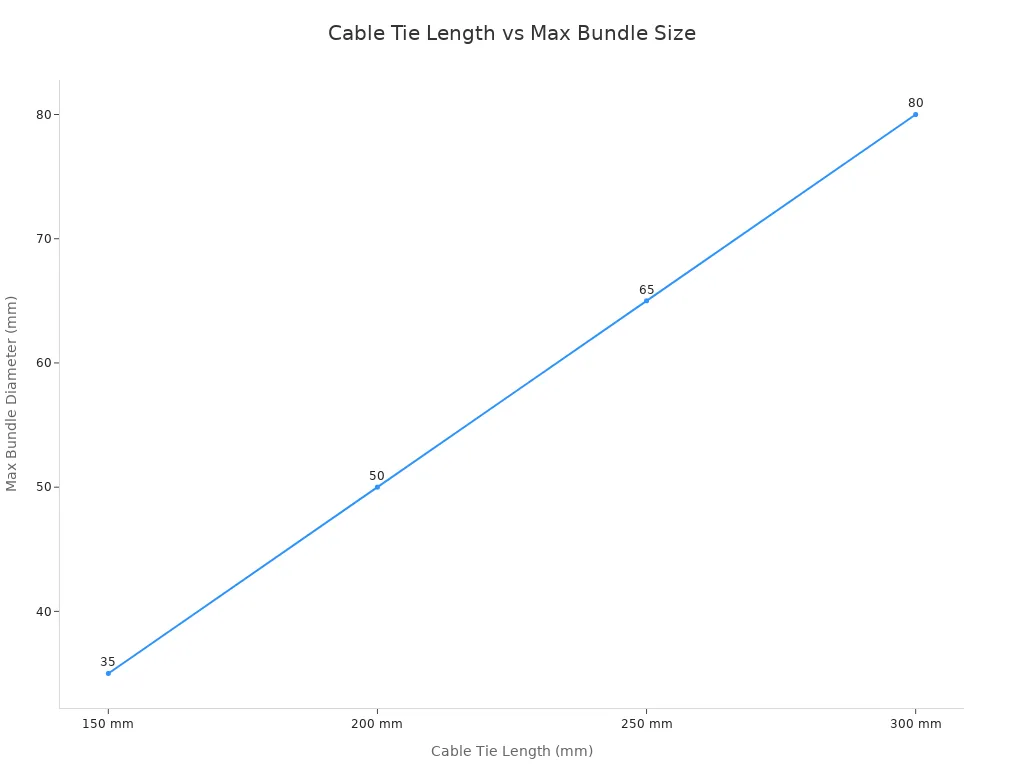
Once you know your bundle diameter, look at the cable tie length and width. The length tells you how big a bundle the tie can wrap around. The width affects how strong the tie is. Longer ties fit bigger bundles, while wider ties hold more weight.
Here’s a table that shows how cable tie length and width match up with maximum bundle size:
Item Code | Length (mm) | Width (mm) | Max. Bundle Diameter (mm) |
|---|---|---|---|
Q150LH-R | 150 | 7.6 | 35 |
Q200LH-R | 200 | 7.6 | 50 |
Q250LH-R | 250 | 7.6 | 65 |
Q300LH-R | 300 | 7.6 | 80 |
You can see that as cable tie length increases, the maximum bundle diameter goes up. If you have a thick bundle, pick a longer tie. If you need extra strength, choose a wider tie.
Note: Always check both the length and width before buying cable ties. This helps you avoid problems with bundles that are too big or too heavy.
Now, let’s talk about cable tie strength. Tensile strength means how much force a cable tie can handle before it snaps. You need to match the strength to your job. If you use ties that are too weak, they can break and cause safety hazards.
Here are some key points about tensile strength:
Loop tensile strength is the main way to measure how strong cable ties are.
Zip tie tensile strength shows the maximum weight a tie can hold before breaking.
If you use a zip tie rated for 120 lbs, it will fail if you try to hold more than that.
Strong cable ties are important for bundling or hanging heavy objects.
Tensile strength tells you how much force it takes to break or deform a tie.
Knowing tensile strength makes it easier to pick the right cable ties for your project.
If you use cable ties with low strength for heavy-duty jobs, you risk breakage and poor support. This can lead to accidents or damage. Manufacturers offer cable ties in different strength categories. Light-duty ties work for small bundles, but heavy-duty ties are needed for big loads.
Here’s a quick guide to help you choose:
Check the tensile strength rating before you buy.
Regular nylon ties usually handle 18 to 250 lbs. Heavy-duty ties can go over 350 lbs.
Always match the strength rating to your application. This keeps your cables safe and secure.
Tip: Never use light-duty cable ties for heavy loads. This can cause them to snap and create safety risks.
If you want to keep your cables safe, always check the bundle size, cable tie length, width, and cable tie strength. This helps you pick the right cable ties for any job, big or small.
Some cable ties have extra features. These features help you fix problems. They also make cable management easier. Let’s look at the most common options. You can use them in different places.
Releasable cable ties open and close many times. You can move your cables without cutting the tie. This saves you time and money. It helps if you change your setup a lot. Reusable cable ties are good for short jobs. They work well at trade shows or when you need to move wires.
Here’s a quick comparison:
Cable Tie Type | Loop Tensile Strength (lbs) | Best Use Case |
|---|---|---|
Self-Locking Cable Ties | 18 - 250 | Permanent installations |
Reusable Cable Ties | 40 - 50 | Temporary or adjustable jobs |
Tip: Use reusable cable ties for setups you change often. Pick self-locking ties for jobs that need extra strength.
Color cable ties help you sort cables by type. You can find problems faster. They keep things neat. In factories, color ties help you find the right wire. In hospitals, they help staff get to important equipment quickly.
Environment | Benefit |
|---|---|
Factories | Keeps wiring organized, reduces downtime |
Data Centers | Speeds up troubleshooting and upgrades |
Electrical Installations | Separates power, lighting, and communication cables |
Hospitals | Supports quick access during emergencies |
Residential | Makes cable runs tidy |
Note: Color cable ties make cable management easy and safe. You can use them to follow safety rules or just keep things neat.
Metal detectable cable ties have metal bits inside. Scanners can find them if they break or fall into food or medicine. You need these ties in food factories, drug labs, or chemical plants.
Industry | Reason for Use |
|---|---|
Food and Beverage | Prevents contamination in production |
Pharmaceutical | Ensures safety in drug manufacturing |
Industrial Manufacturing | Reduces risk of foreign matter in products |
Chemical Processing | Maintains hygiene and safety standards |
Hospitals and Laboratories | Protects against contamination |
Metal detectable cable ties help you meet safety rules and keep products clean.
If you want to choose the right cable ties, think about these special features. They help you fix problems and keep cables safe and neat.
You want your cable ties to last as long as possible. Good storage makes a big difference. If you store them the wrong way, they can get brittle and lose their flexibility. This can cause them to snap when you need them most. Here are some tips to help you keep your cable ties in top shape:
Store your cable ties in a cool, dry place. Heat and humidity can make them weak.
Keep them away from sunlight. Use opaque bins or boxes so UV rays do not reach them.
Sort your cable ties by type and size. This makes wire management faster and easier.
Use the First-In, First-Out (FIFO) method. Always use the oldest ties first so none go bad.
Improper storage can cause real problems. When cable ties get too much heat, moisture, or sunlight, they start to break down. You might notice they feel stiff or snap easily. This means they will not hold your cables safely. Always keep them away from chemicals and temperature swings. If you follow these tips, your cable ties will stay strong and flexible for every project.
You want your cable ties to work well and last. The way you install them matters. Here are some best practices to help you avoid damage and get the best results:
Clean the area before you start. Remove any dirt or sharp edges that could cut the tie.
Place the cable tie evenly around your bundle. Do not twist or stretch it too much.
Use a cable tie tool if you have one. This helps you pull the tie tight without overdoing it.
Apply just enough tension. Too tight can damage the tie, too loose will not hold.
Trim off the extra length with a flush-cut tool. This keeps the ends smooth and safe.
Check your work. Give the bundle a gentle pull to make sure the tie holds.
Pick the right tie for the job. If you work in a hot or chemical-heavy place, use ties made for those conditions.
If you follow these steps, you will keep your cable ties working well and your wire management neat and safe.
You can pick the best cable ties for your project by following a few simple steps:
Measure your bundle diameter.
Check the strength you need.
Think about where you will install them—indoors or outdoors.
Choose the right material for your environment.
Look for special features that fit your job.
If you use these tips, you will avoid common mistakes and keep your cables safe. Try them out on your next project!
You should measure the diameter of your cable bundle. Pick a cable tie that is longer than the bundle’s size. Always check the packaging for the maximum bundle diameter.
You can reuse some cable ties. Look for ones labeled as releasable or reusable. These let you open and close them many times without cutting.
Some cable ties work well outside. Choose UV-resistant or stainless steel cable ties for outdoor jobs. These last longer in sunlight and rain.
Start by sorting your cables. Use cable ties to bundle them together. Place the bundles into your cable management system to keep everything neat and easy to find.
Remove the broken tie and replace it with a new one. Make sure you pick the right size and material for your environment to prevent future breaks.

