
Views: 0 Author: Site Editor Publish Time: 2026-10-07 Origin: Site


Do frayed wires cause unexpected machine downtime in your factory? In dynamic manufacturing environments, industrial cables face constant friction, intense vibration, and high heat daily. Left unprotected, exposed wiring harnesses lead to sudden electrical failures. Production halts. Workplace safety hazards multiply.
In this guide, you will see how spiral wrapping bands serve as a critical defense line for industrial machinery. We will explore their core mechanics, compare polymer materials, and provide a hands-on installation framework to help engineers optimize facility infrastructure.
With the rapid rise of Industry 4.0, factory floors are increasingly packed with multi-axis robotics and high-density sensor networks. Modern machines rely on constant, real-time data transmission through complex, moving mechanical joints. Consequently, traditional rigid conduits are failing. They crack under repetitive bending cycles and severely restrict robotic mobility.
Industry analysts note a massive shift toward adaptable routing solutions. Facility engineers now demand protective sleeves that move fluidly with the machine. This ensures uninterrupted signal integrity without sacrificing physical armor. Adaptable wraps have transitioned from optional accessories to mandatory components in contemporary automated machine design.
Before designing a wiring layout, engineers must understand the physical mechanics of these extrusions. A wrapping band is a tubular plastic extrusion specifically engineered to bundle and protect electrical wires, pneumatic hoses, and hydraulic lines. The unique helical cut allows the material to expand, wrapping tightly around bundles of varying sizes much like a coiled spring.
Specifically, the expandable nature of the wrap is its greatest asset. A single sleeve size adapts to various bundle diameters. A narrow band stretches to grip an 8mm cluster of delicate sensor wires. Conversely, larger variants expand to lock down thick 25mm power feeds. Target applications include automated machine building, high-speed packaging lines, and intricate industrial control panels where organized routing guarantees operational safety.
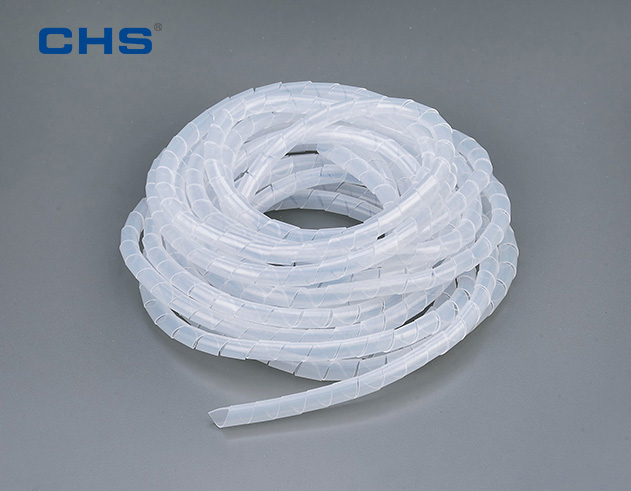
Beyond basic bundling, these components perform several heavy-duty functions that keep assembly lines running smoothly.
In a bustling manufacturing plant, machinery is constantly in motion. Conveyor belts vibrate violently. Robotic arms pivot with lightning speed. This relentless movement causes exposed cables to rub against sharp metal edges and screws. Over time, this chafing strips away the primary insulation of the wires, exposing the live copper inside.
The wrap acts as a tough sacrificial barrier. Made from durable plastics, it absorbs the physical wear and tear that would otherwise destroy the electrical wires. By taking the brunt of the mechanical stress, the sleeve prevents costly short circuits and unplanned operational downtime.
While solid PVC tubing provides excellent impact resistance, it fails completely when a machine requires multi-directional wiring. The most significant functional advantage of a spiral-cut design is its inherent flexibility and capacity for creating seamless breakouts.
In a typical machine harness, not all wires travel to the exact same destination. A main power bundle might run along the base of a machine, but specific sensor wires must branch off to reach different actuators. The spiral gaps allow technicians to route a single wire out of the main bundle at any exact point. This eliminates the need for expensive junction boxes, streamlining the entire electrical architecture.
Electrical cables naturally generate heat, especially when carrying high currents in heavy-duty equipment. When wires are bundled tightly inside solid, unventilated tubing, this heat becomes trapped. Elevated temperatures degrade wire insulation over time and alter electrical resistance, leading to thermal failure.
In contrast to solid sheathing, the structural gaps inherent in a spiral design allow ambient air to circulate freely around the individual wires. This passive ventilation significantly improves heat dissipation. It prevents the harness from overheating even during continuous, high-stress operational cycles.
Beyond direct protection, these bands offer logistical advantages that make them a preferred choice for maintenance teams.
One of the most significant logistical advantages is the application method. In a factory environment, powering down a machine and disconnecting wire terminations just to slide a solid tube over a harness results in massive downtime. The lateral slit design means you never have to unplug the machine. You simply wind it around the live, fully connected cables in situ. This single feature saves hours of maintenance delays.
Industrial machinery frequently requires diagnostic checks and component upgrades. When cables are bound with permanent solutions, accessing a faulty wire requires cutting and discarding the binding material. Spiral wraps are entirely reusable. If a technician needs to replace a single damaged wire, they simply unwrap the band, swap the cable, and rewrap the exact same band. This makes them highly economical.
Visual organization contributes heavily to the 5S methodology utilized in modern manufacturing. A machine with cleanly bundled wiring looks professional and well-maintained. Furthermore, organized wiring makes future troubleshooting significantly faster. Technicians can easily trace the path of a unified bundle rather than sorting through a tangled mess of individual wires.
The overall effectiveness of a protective sleeve depends heavily on its material. Selecting the correct polymer ensures the wrap withstands specific environmental challenges.
Polyethylene is the standard material for general industrial applications. It is highly flexible, lightweight, and cost-effective. Standard Polyethylene options generally handle operating temperatures from -20°C up to 80°C. They are the ideal choice for indoor machinery, office automation equipment, and standard packaging lines where temperatures remain moderate.
When a machine operates in an aggressive environment, standard plastics fall short. Nylon, often Polyamide 6 or 66, provides superior mechanical strength and crush resistance. More importantly, Nylon has a significantly higher operating temperature range, often capable of withstanding continuous heat up to 120°C. It also resists industrial solvents and automotive oils, making it crucial for CNC machining centers.
Selecting the correct size is just as critical as the material. A wrap that is too small leaves cables exposed, while one that is too large will slide out of place during machine operation.
First, accurately determine the outer diameter of your wire harness using a digital caliper. Always measure the cross-section at its thickest point, including any overlapping splices.
When selecting the product, apply the snug fit rule. The unexpanded inside diameter of the wrap must be slightly smaller than your total bundle diameter. For instance, if you are working with a large 30mm industrial power feed, choosing a heavy-duty cable wrap like the SWB-30 ensures the plastic exerts a continuous, gentle clamping force. This tight grip prevents the material from uncoiling during high-vibration operations.
Proper installation guarantees optimal protection and extends the life of your machinery. The entire process requires only basic hand tools.
Before touching any wires, strictly adhere to safety protocols by powering down the machinery. Clean the cables thoroughly to remove industrial oils and dust, ensuring the plastic grips securely without internal slippage.
Untangle all individual wires and group them by function. Apply temporary cable ties every few inches along the harness. This holds the wires tightly together, creating a stable, cylindrical base for wrapping.
Begin near the main control panel. Wrap the end of the band around the bundle two or three times to establish a firm anchor point. Twist the material around the wires, maintaining consistent tension. Be careful not to pull too tightly, as excessive tension can damage internal copper strands. As you progress down the line, snip and remove the temporary ties.
When you reach a point where a specific wire needs to diverge to a sensor, stop wrapping just before that junction. Isolate the specific wire and gently pull it out through the natural gap in the spiral cut. Ensure it does not bend too sharply against the plastic edge. Once the wire is out, simply resume wrapping the main band around the remaining bundle.
Engineers must balance cost, flexibility, and maintenance requirements. The table below compares popular industrial routing solutions.
| Feature | Spiral Wrapping Bands | Heat Shrink Tubing | Standard Cable Ties |
|---|---|---|---|
| Dynamic Flexibility | Excellent (Moves with robotic joints) | Poor (Becomes rigid once cured) | Good (But leaves gaps exposed) |
| Installation Speed | Fast (No disconnection needed) | Slow (Requires heat gun and shutdown) | Very Fast |
| Environmental Seal | None (Open gaps for ventilation) | Complete Watertight Seal | None |
| Breakout Capability | Seamless at any point | Requires specialized molded boots | N/A |
| Reusability | 100% Reusable | Single-use only | Single-use (unless releasable type) |
As the table illustrates, wraps prioritize continuous access and dynamic movement. However, if your application requires a total environmental seal against heavy fluids, you should consider heat shrinkable tubings instead. For moving automation parts, the spiral design remains unmatched.
Ultimately, flexible wrapping bands provide an indispensable layer of durable defense for industrial machine cables. By shielding sensitive wiring from abrasive friction while allowing for dynamic movement and passive cooling, they solve multiple engineering challenges simultaneously.
Effective cable management directly extends your machinery's lifespan, slashing the likelihood of dangerous electrical failures and costly production downtime. Evaluate your current machinery wiring setup today. Ready to eliminate wiring failures? Explore the full range of high-performance protective solutions at CHS Plastics to find the exact match for your operational environment.
Yes, these bands can be easily cut to any desired length to match your specific wiring needs. You can use standard scissors, heavy-duty shears, or wire cutters. Always measure your cable run twice before cutting the plastic material to avoid unnecessary waste.
No, they do not offer waterproof or moisture protection due to the inherent spiral gaps present in their design. While they excel at physical defense and heat dissipation, applications requiring total environmental sealing against fluids should utilize alternative methods like heat shrink tubing.
Removal is incredibly straightforward. Simply unwrap the band in the reverse direction of its original installation. By slowly following the spiral path backwards, it easily comes off without causing any damage to the internal wires. Because the material retains its shape, you can store it and reuse it for future maintenance tasks.
Absolutely. Its inherent flexibility makes it an excellent choice for dynamic applications, including multi-axis robotics and high-speed automated packing machines. The helical cut allows the material to bend and flex continuously without kinking or breaking apart under repetitive mechanical stress.
Split loom tubing features a single, straight longitudinal slit running down its entire length, making it very fast to push cables into. However, it is stiffer and can pop open under tight bends. Spiral wrap is cut helically, meaning it wraps around the bundle like a spring. This provides vastly superior flexibility for moving parts and holds the cables much more securely during intense vibration.
When dealing with a harness that has multiple breakouts, size the wrap based on the thickest continuous section of the main bundle. Because the material is highly expandable, a single wrap can comfortably hold the thick main trunk and gracefully contract to grip the thinner sections after several wires have branched off.

