
Views: 0 Author: Site Editor Publish Time: 2026-08-12 Origin: Site


Industrial automation relies heavily on precise communication and uninterrupted power delivery. Yet, engineers often treat wire routing as a mere afterthought. This oversight frequently leads to catastrophic machine failures. Disorganized control cabinets and exposed facility wiring drastically increase downtime. They also complicate basic troubleshooting. You must transition from simply recognizing a messy panel to evaluating and implementing robust infrastructure. Industrial environments demand strict thermal management, aggressive chemical resistance, and extreme durability. Standard commercial network deployments simply cannot survive these harsh conditions.
In this article, we explore how to select the right Cable Management Solutions for high-stress automation applications. You will learn actionable strategies for separating signals, maintaining bend radii, and avoiding common installation pitfalls. We provide a clear roadmap to secure your automated systems against predictable physical failures. Carefully planned infrastructure transforms chaotic wiring into a reliable, easily maintained asset.
Selecting the right cable management solutions requires evaluating environmental stressors (vibration, heat, chemicals) alongside mechanical routing needs.
Proper separation of power and communication cables, combined with strict bend radius management, is non-negotiable for system reliability.
The choice between off-the-shelf components and custom-engineered assemblies depends on production volume, spatial constraints, and maintenance access requirements.
Disorganized wiring directly impacts operational efficiency and facility safety. When engineers neglect proper routing, minor issues escalate into major operational blockages. We see these impacts across maintenance schedules, equipment performance, and regulatory compliance.
Unstructured "spaghetti wiring" turns routine maintenance into a complex puzzle. When a component fails, technicians must manually trace individual wires through dense, tangled bundles. This process significantly increases the mean time to repair (MTTR). Every minute spent untangling wires equals lost production revenue. Organized routing frameworks allow technicians to identify fault points instantly. Clear pathways isolate discrete circuits, meaning technicians can replace damaged sensors or relays without disturbing adjacent systems.
Improper routing introduces severe invisible risks to your automation equipment. Densely packed wires restrict essential airflow inside control panels. This blockage creates localized heat pockets. Elevated temperatures rapidly degrade wire insulation and reduce the lifespan of sensitive electronic components. Furthermore, grouping high-voltage power lines alongside low-voltage control signals creates electromagnetic interference (EMI). EMI causes erratic sensor readings and drops in data transmission. Best practice dictates physical separation between power and data lines to maintain signal integrity.
Ignoring established wiring standards exposes your facility to severe liabilities. Exposed loops and poorly anchored bundles create serious trip hazards around automated zones. Regulatory bodies like OSHA, UL, and the NEC enforce strict standards regarding physical wire protection. Failing to secure loose lines near moving machinery invites physical snagging. A snagged wire can pull equipment down or trigger arc flashes. Properly secured infrastructure ensures compliance and protects human operators working near dynamic equipment.
Engineers must match specific routing hardware to the physical demands of the installation. A successful design combines multiple containment strategies. Below, we break down the primary categories of routing infrastructure.
Control panels rely heavily on rigid ducts to organize internal pathways. You must choose between solid and slotted duct walls based on the application. Slotted ducts allow wires to exit smoothly at various heights, directly aligning them alongside internal components. Solid ducts provide maximum physical protection for long, uninterrupted runs. Capacity planning remains crucial here. Always maintain a 40% to 50% fill ratio inside the raceway. This optimal fill ratio permits adequate heat dissipation. It also leaves sufficient physical space for future equipment expansion.
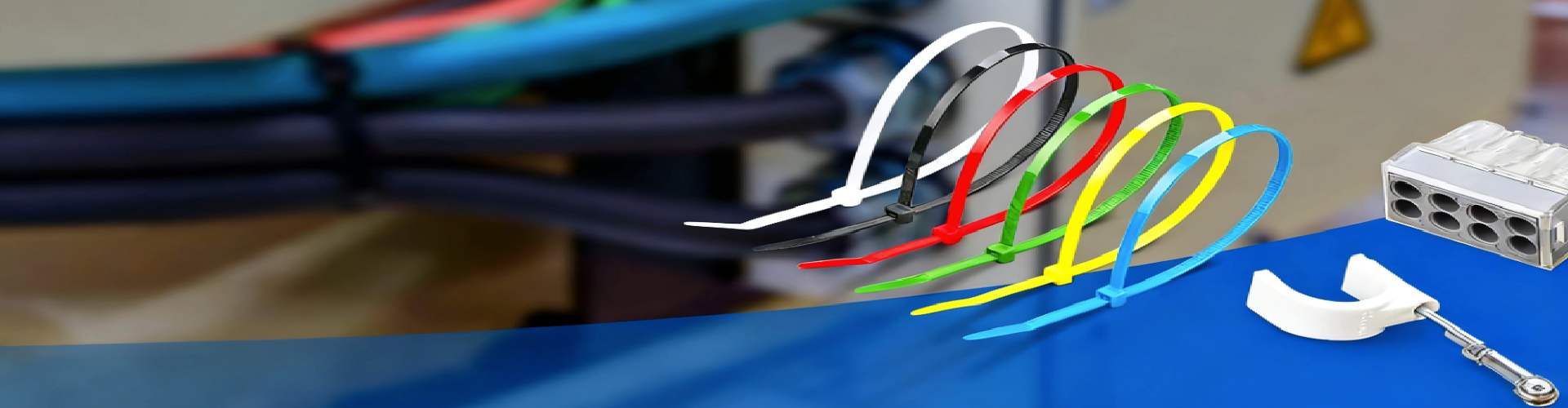
Securing individual bundles requires highly specific fastening hardware. You must evaluate industrial cable ties based on environmental exposure. Standard nylon works for mild indoor environments. However, stainless steel ties are mandatory for extreme heat or highly corrosive zones. Specialized polymer ties resist prolonged UV exposure and harsh chemical washdowns. Proper anchoring prevents jacket damage over time. Use edge clips to secure lines along panel borders without drilling. Employ adhesive mounts for quick installations on flat metal surfaces. Always use tension-controlled fastening tools. These tools cut ties flush and prevent operators from crushing the underlying wire jackets.
Exposed lines running between machines need robust external defense. Different flexible covers serve distinctly different protective roles.
Table 1: Comparison of Protective Conduits and Tubing | ||
Type of Protection | Primary Characteristics | Ideal Industrial Application |
|---|---|---|
Corrugated Tubing | High crush resistance, lightweight, moderate flexibility. | General machine routing, fixed external cabinet connections. |
Braided Sleeving | Expandable, highly flexible, abrasion-resistant. | Dynamic robotic arms, areas requiring continuous motion. |
Liquid-Tight Conduit | Sealed jacket, heavy-duty physical barrier, waterproof. | Food processing washdown zones, outdoor facility routing. |
You must address whether your application is dynamic or static. Continuous flexing requires braided sleeving to prevent internal friction. Fixed cabinet routing benefits more from rigid, crush-proof corrugated tubing.
Macro-level facility routing demands heavy-duty structural support. Wire mesh trays and ladder racks carry massive bundles across factory ceilings. Wire mesh trays offer excellent visibility. They allow dirt to fall through, preventing debris accumulation. Ladder racks provide immense structural strength for thick, heavy power cables. Frame your selection criteria around maximum load capacity and grounding capabilities. Ensure the chosen framework allows maintenance teams easy overhead access for future upgrades.
Choosing the correct hardware involves analyzing the specific conditions of your manufacturing floor. Infrastructure must withstand daily operational abuse while allowing for future modifications.
Environmental Resilience: Match the material specifications to facility conditions. Rely on established NEMA and IP ratings. A washdown environment in a food processing plant requires IP69K-rated, waterproof conduits. Conversely, a high-heat metal fabrication facility needs flame-retardant, temperature-resistant shielding.
Mechanical Stress and Bend Radius: Copper and fiber optic lines possess strict minimum bend radii. Bending a line too sharply causes internal micro-fractures. Choose routing solutions featuring built-in sweeping curves. Physical guides forcefully prevent installers from exceeding the safe bend radius.
Scalability and Modularity: Automation systems evolve rapidly. Favor containment systems offering tool-less additions. Snap-on covers and modular dividers allow technicians to modify pathways effortlessly. You should never need to execute a complete machine shutdown simply to add one new sensor wire.
Standard Components vs. Custom Assemblies: Decide between standard catalog parts and custom-molded harnesses. High-volume machine production justifies the engineering time required for custom, pre-routed harnesses. Standard off-the-shelf components work best for low-volume, highly variable facility layouts requiring fast deployment speeds.
Even the highest-quality hardware fails if implemented poorly. Successful deployments require strategic foresight and rigorous installation protocols. Many facilities suffer because engineers treat routing as the final step in the assembly process.
The best strategy begins during the initial CAD and component selection phase. Do not wait until the hardware is physically bolted to the floor. Map out all routing pathways digitally. Allocate physical space for ducts, trays, and anchoring points before finalizing the enclosure size. Failing to plan these spatial requirements forces technicians to cram wires into unsuitably small spaces later.
A common mistake involves running different signal types through the same unshielded channel. Engineers must segregate high-voltage power, digital data, and analog control lines.
Common mistake: Bundling 480V power lines directly against sensitive Ethernet cables.
The fix: Implement physical metal barriers inside trays.
Alternative approach: Enforce strict spatial spacing protocols, keeping power and data at least six inches apart.
Moving automation parts place severe stress on wiring infrastructure. Ignoring torsion and cycle-life ratings leads to rapid degradation. Standard management hardware shatters under continuous robotic twisting. You must utilize specialized, highly flexible carriers for dynamic applications. Establish a strict tracking system for cycle counts. Replace flexible carriers before they reach their maximum mechanical lifespan to prevent unexpected line severing.
A perfectly routed panel remains useless if nobody knows where the lines originate. Integrate permanent labeling schemes directly into the infrastructure. Use heat-shrink labels or durable industrial tags at both ends of every run. Match these physical labels perfectly to the facility's master wiring schematics. This operational necessity guarantees that any technician can confidently diagnose and repair the system years after the initial installation.
Transitioning from design to procurement requires vetting suppliers rigorously. You need partners capable of providing reliable components that precisely meet your engineered specifications.
Evaluate suppliers beyond their basic product catalogs. Look for vendors offering downloadable 3D CAD models. These models allow your engineering team to simulate fitment digitally. Demand full compliance documentation for all materials, verifying UL or CE certifications. Assess their supply chain reliability. Long lead times on critical routing components will stall your entire automation deployment.
Never place bulk orders based entirely on a datasheet. Request physical material samples from shortlisted vendors. Expose these samples to your specific localized hazards. Soak polymer samples in your facility's machine lubricants. Expose them to your specific cleaning chemicals. Test their flexibility after exposing them to extreme thermal highs and lows. Real-world testing exposes material weaknesses before you install them across a massive factory floor.
Requesting accurate quotes requires a highly detailed specification sheet. Ambiguous requests lead to incorrect hardware deliveries. Consolidate your requirements into a standardized format.
Chart 1: Critical Spec Sheet Data Points | |
Category | Required Detail for Vendors |
|---|---|
Dimensional Data | Total run lengths, exact panel dimensions, required duct widths. |
Environmental Factors | Expected temperature ranges, chemical exposures, UV presence. |
Dynamic Requirements | Flexibility needs, estimated cycle-life counts for moving parts. |
Capacity Needs | Current wire volume, required fill ratios, planned expansion space. |
Providing this exact data ensures vendors recommend the correct material grades. It also accelerates the procurement cycle significantly.
Robust wire management represents a foundational engineering decision. It secures your automation equipment against physical wear, thermal damage, and signal degradation. By prioritizing environmental resilience and strict signal separation, you eliminate the most common causes of machine downtime. Treating this infrastructure as critical hardware ensures your systems remain safe, compliant, and easy to troubleshoot.
Audit your current panel designs today using the evaluation frameworks detailed above. Identify any areas where tight bends or mixed signals threaten your reliability. Initiate technical conversations with specialized vendors to test sample materials in your harshest facility zones. Proactive structural planning will ultimately safeguard your critical automated assets.
A: The industry standard fill ratio for industrial raceways sits between 40% and 50%. Keeping the duct half-empty ensures adequate airflow for heat dissipation. This spacing prevents thermal degradation of wire insulation. It also leaves accessible physical room for future sensor additions without requiring technicians to force new lines into overstuffed channels.
A: You should maintain a minimum separation distance of six inches between high-voltage power lines and low-voltage communication wires. If physical space constraints prevent this spacing, you must install grounded metal dividers between them. Crossing them at exact 90-degree angles also helps minimize severe electromagnetic interference (EMI) risks.
A: Standard nylon ties degrade quickly in harsh environments. You must use stainless steel ties in areas experiencing extreme heat, such as metal fabrication zones. They are also mandatory in facilities requiring highly caustic chemical washdowns, or in outdoor locations subjected to intense, prolonged UV exposure where plastics become brittle.
A: Proper management ensures facilities meet stringent OSHA and NEC safety standards. It provides crucial strain relief, preventing wires from pulling loose and causing arc flashes. Furthermore, anchoring lines securely eliminates severe trip hazards. It physically blocks loose wires from interfering with or snagging on dangerous moving machinery parts.

