
Views: 0 Author: Site Editor Publish Time: 2026-08-14 Origin: Site


Standardizing indoor wire routing presents a daily operational challenge for professional installers. You must constantly balance installation speed, aesthetic impact, and material constraints without ever compromising safety. Defaulting to a single fastener material for all environments invariably creates distinct problems. You either over-engineer standard runs by wasting resources on heavy-duty metal hardware, or you risk critical non-compliance by placing plastic in fire-sensitive zones. Choosing the wrong material actively degrades installation quality and introduces long-term liabilities. This guide provides a strict, use-case-driven framework for modern wire management. You will learn exactly when to specify plastic cable clips versus metal alternatives for diverse indoor environments. We explore regulatory baselines, substrate compatibility, and risk mitigation strategies to optimize your next project.
Plastic variants offer superior cost-efficiency, non-conductive safety, and faster installation for standard indoor drywall and wood routing.
Metal clips remain mandatory for specific regulatory compliance (e.g., fire escape routes) and heavy-duty armored cables.
Selection should be based on three criteria: building code requirements, cable jacket vulnerability, and installation substrate.
Procurement managers can reduce project fastener costs significantly by isolating heavy-duty zones and using plastic for the remaining 80%+ of indoor runs.
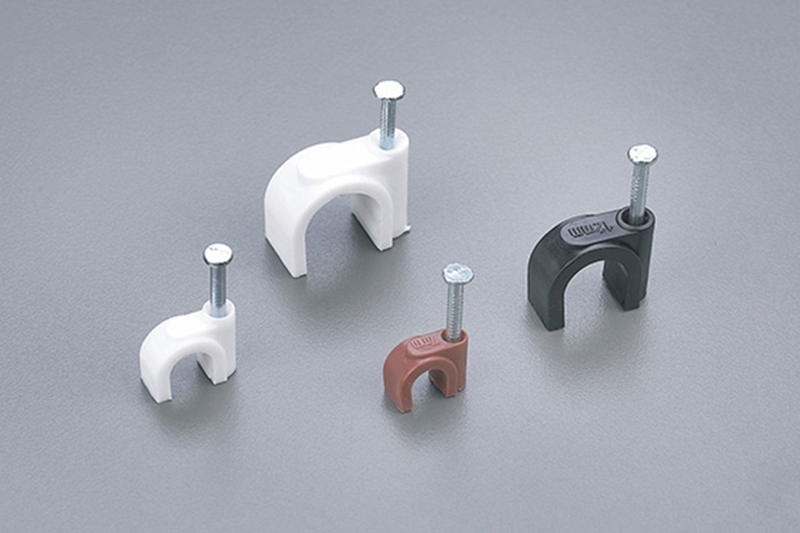
Modern cable management requires a methodical approach to material selection. Installers cannot simply guess which fastener suits a particular wall or ceiling. Establishing clear success criteria ensures every wire run meets safety and performance standards. We evaluate these criteria across four specific pillars.
Building codes dictate strict baseline safety rules for indoor environments. You must consult local wiring regulations before selecting any fastener. Frameworks like the NEC or BS 7671 explicitly address premature wiring collapse during a fire. Entangled cables trap escaping occupants and hinder firefighters. Understand these codes to determine exactly where heat-resistant supports remain strictly legally required.
Fasteners perform only as well as their anchoring surface. You must evaluate how different clips interact directly with common indoor materials. Drywall fractures easily under excessive impact. Timber studs accept nails smoothly but require accurate spacing. Masonry walls demand specialized, hardened pins. Matching the fastener type to the substrate prevents structural damage and guarantees long-term holding power.
Modern data networks rely on fragile internal geometries. Category 6 (Cat6) and Cat6a cables feature delicate twisted pairs. You must protect these lines from pinch points, crushing, and jacket abrasion. Standard twin-and-earth power lines also require careful handling to prevent exposing live copper. Selecting an overly rigid fastener often damages these vulnerable jackets during installation.
Exposed indoor wire runs demand high aesthetic integration. Residential retrofits and finished commercial spaces rarely tolerate industrial-looking hardware. You must assess the visual impact of your chosen fasteners. Property owners expect seamless wire routing along skirting boards and architectural trim. The ideal fastener secures the line firmly while blending into the background environment.
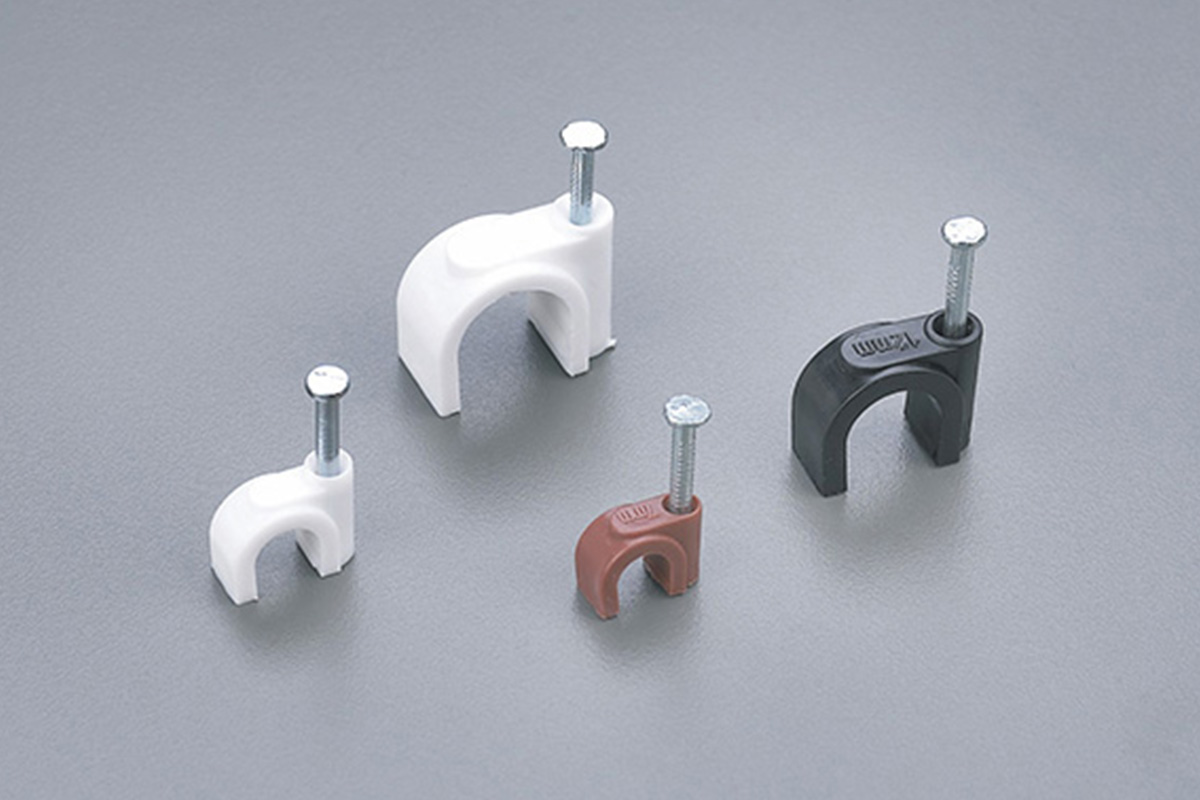
For most standard indoor applications, polymer-based fasteners provide exceptional versatility. They solve multiple installation challenges simultaneously. By understanding these inherent benefits, you can specify them confidently across appropriate project zones.
Polymer materials inherently insulate against electricity. This non-conductive nature drastically reduces grounding risks during installation. If a hammer accidentally drives a nail through a power cable jacket, a plastic body will not become live. This insulative buffer protects the installer from immediate shock hazards. It also prevents localized short circuits along the wall surface.
Rigid metal edges often bite into soft PVC cable jackets. Conversely, the flexible arch of Cable Clips gently conforms to the wire. This flexibility prevents severe jacket scoring and micro-crushing. Protecting the jacket proves especially critical for high-frequency data lines. Signal degradation often occurs when installers over-compress standard Cat6 lines using unyielding metallic brackets.
Large multi-room projects require thousands of individual fasteners. Material efficiency becomes a massive priority. Plastic variants offer a tremendous per-unit cost advantage over machined metal saddles. When you multiply these savings across miles of indoor wiring, the project budget impact becomes highly significant. This scalability allows teams to allocate resources to more critical infrastructure needs.
Indoor environments still present distinct moisture challenges. Utility rooms, basements, and bathrooms experience high ambient humidity. Bare metal components easily oxidize and rust over time. Rusty fasteners stain walls and eventually fail mechanically. Polymer bodies never rust. They maintain their structural integrity and clean appearance despite constant exposure to indoor dampness.
Surface wiring should never act as an eyesore. Plastic fasteners excel in visual environments. Manufacturers produce them in multiple standard colors, including white, black, and grey. Installers can easily match the fastener to the cable and the surrounding skirting board. This seamless integration ensures the wire run looks intentional and professionally finished.
Despite the overwhelming benefits of plastic, certain scenarios strictly demand metallic fasteners. Ignoring these specific use cases compromises both legal compliance and basic life safety. We must treat metallic supports as specialized tools for critical environments.
Polymer materials possess a critical limitation: they melt under extreme heat. Standard polymers fail rapidly during structural fires. Therefore, you must use metallic fasteners in all designated fire escape routes. Overhead ceiling voids and exit corridors require non-melting supports. Falling cables pose fatal entanglement hazards to evacuating personnel. Metal guarantees the wiring remains securely anchored against the ceiling during emergencies.
Industrial-grade power routing often involves Steel Wire Armored (SWA) cables. These thick lines carry immense weight per meter. Standard plastic arches lack the necessary tensile strength to support this burden horizontally. Metallic cleats and heavy-duty P-clips serve as the default choice here. They securely anchor massive conduit runs without buckling under sustained gravitational loads.
Choosing plastic is never universally better. It is highly optimal only outside of strict heavy-duty or fire-rated exceptions. Good engineering requires recognizing material limits. Always specify metal for life-safety routes and armored loads. Reserve polymer fasteners for standard, low-voltage, and light-power runs across standard residential or office spaces. This balanced approach ensures absolute safety and maximum efficiency.
Evaluating fasteners purely on material properties misses a crucial operational factor. Installation mechanics heavily influence overall project timelines. We must analyze how these two materials compare regarding physical labor, necessary tooling, and inevitable on-site adjustments.
Handling speed directly dictates daily progress. Polymer clips typically feature pre-inserted masonry nails housed within gripping collars. Installers can hold the wire and hammer the fastener using just one hand. This allows for rapid, continuous movement down a wall. Multi-part metal saddles usually require holding a bracket, inserting a separate screw, and driving it carefully. This multi-step process significantly slows down the workflow.
Heavy tooling tires installers and complicates site logistics. Applying standard polymer clips requires only a basic hammer. Installers can carry hundreds of clips in a simple pouch. Conversely, metal P-clips generally demand power drills, masonry anchors, and specific driver bits. Managing powered equipment on ladders adds unnecessary complexity to standard wire routing tasks.
On-site adjustments happen constantly. A client might request a slightly different wire path mid-installation. Installers can easily lever off a polymer clip using claw pliers. The thin nail leaves a nearly invisible pinhole in the drywall. Relocating a screwed-in metal bracket requires extracting a masonry anchor. This leaves a massive crater requiring spackle, sanding, and repainting.
The true project impact emerges when combining material expenses and hourly labor rates. Fast hammering speeds reduce the total hours spent per 100 meters of installed cable. Avoiding complex drill-and-anchor methods lowers equipment wear. Reducing drywall repair time during adjustments prevents project delays. Standardizing on easy-to-install polymers for non-critical zones significantly drops the overall installation expenditure.
Evaluation Metric | Plastic Fasteners | Metal Fasteners |
|---|---|---|
Installation Speed | Rapid (One-handed hammering) | Slow (Drilling and screwing required) |
Tooling Needed | Standard hammer | Power drill, masonry bits, screwdriver |
Rework Impact | Minimal (Tiny pinholes) | High (Large anchor holes need patching) |
Handling Weight | Extremely lightweight | Heavy bulk weight |
While polymer fasteners provide massive advantages, improper installation quickly leads to failure. Installers must adopt specific best practices to guarantee structural integrity. Following technical guidelines mitigates common risks associated with standard wire routing.
Nail Quality Matters: A fastener body is only as reliable as its anchoring pin. Cheap carbon steel nails bend instantly upon hitting dense brick or aged timber. You must specify fasteners equipped with hardened, zinc-plated nails. Hardened steel penetrates tough masonry without buckling. Zinc plating prevents hidden rust degradation deep inside the wall matrix.
Over-Torquing and Spacing Failures: Unsupported cable weight causes sagging and eventual arch fractures. You must follow strict spacing guidelines. Place fasteners every 300mm horizontally and every 400mm vertically. Additionally, installers must strike the nail squarely. Over-hammering crushes the polymer arch directly into the cable jacket. This immediately degrades data signals and compromises electrical insulation.
Temperature Limitations: Ultraviolet degradation rarely affects indoor runs, but ambient temperature swings absolutely matter. Cold environments cause polymer bodies to become brittle. Installing freezing clips in unheated winter builds often leads to instant shattering upon impact. You must allow these fasteners to reach normal room temperature inside a heated vehicle before striking them.
Purchasing departments play a vital role in project safety. Buying massive bulk bags of generic fasteners without reviewing site plans leads to installation disasters. A methodical procurement strategy ensures the right material reaches the right project zone.
Begin by meticulously auditing the project blueprint. You must separate fire-critical paths from standard routing zones. Highlight all fire escape routes, stairwells, and overhead commercial plenums. Order certified metallic supports exclusively for these marked areas. For the remaining standard residential or office wall routes, specify high-quality polymer fasteners. This deliberate segregation optimizes project efficiency safely.
Avoid adopting a "one size fits all" purchasing mindset. Cable geometries vary wildly. Flat twin-and-earth power lines require flat-arched fasteners to prevent side-to-side slippage. Coaxial cables and Cat6 lines demand perfectly round arches. Forcing a round cable into a flat bracket pinches the internal wires. You must audit the wire types being installed and order exact matching profiles.
Always vet your manufacturing sources carefully. Request detailed material specifications before ordering bulk shipments. If smoke toxicity concerns exist in the building code, verify the vendor supplies Low Smoke Zero Halogen (LSZH) plastics. Additionally, confirm the precise gauge and hardening process of the integrated masonry nails. Validating these technical details upfront prevents massive on-site installation failures.
Cable Type | Required Clip Profile | Primary Risk of Mismatch |
|---|---|---|
Twin-and-Earth (Power) | Flat Profile | Lateral slippage; edge pinching |
Cat6 / Cat6a (Data) | Round Profile | Twisted pair crushing; signal loss |
Coaxial (Video/RF) | Round Profile | Dielectric deformation; impedance shifts |
Speaker Wire (Audio) | Flat or Custom Oval | Jacket scoring; localized shorting |
Selecting the correct indoor wire support requires moving beyond basic habits. For the vast majority of non-industrial, non-escape-route indoor wiring, polymer-based fasteners provide the absolute optimal blend of speed, safety, and efficiency. They protect delicate data lines, prevent accidental grounding, and blend cleanly into finished environments. However, you must always respect building codes by reserving metallic brackets for overhead fire routes and heavy armored loads.
Your next step involves auditing your current bill of materials. Separate your upcoming wire runs into "standard" versus "critical" categories. Review your blueprints carefully. Once categorized, request physical samples from your vendor to verify nail hardening and arch flexibility. Specify your requirements accurately to ensure your team executes a safe, rapid, and fully compliant installation.
A: Yes, provided the clips are manufactured with hardened, high-carbon steel nails designed specifically for masonry. Standard soft-steel nails will bend and fail immediately upon impact. Always verify the nail rating before attempting to anchor into dense brick or concrete block.
A: No. In fact, plastic is generally preferred to avoid over-compressing the cable and degrading signal quality. The flexible arch protects delicate twisted pairs. Metal is only required if the data run passes through an overhead fire-rated plenum space subject to strict building codes.
A: In temperature-controlled, indoor environments away from direct UV sunlight, high-quality polyethylene (PE) or polypropylene (PP) clips will easily outlast the lifecycle of the cable itself. They will not rust or corrode like untreated metal saddles in damp indoor basements.
A: Yes, for standard surface power and data runs. However, local codes (like the NEC or UK's BS 7671) strictly mandate metal supports for overhead runs in specific areas to prevent premature collapse during a fire. Always verify local fire safety regulations before installation.

