
Views: 0 Author: Site Editor Publish Time: 2026-10-07 Origin: Site


A snapped zip tie does more than ruin a project. It damages expensive equipment, creates immediate safety hazards, and causes massive operational downtime. I have seen countless buyers and junior engineers make a critical mistake. They select their strapping based solely on length or the lowest price. They completely ignore the single most vital metric. Tensile strength.
As the ultimate indicator of a fastener's reliability, tensile strength dictates exactly how a product will perform under intense physical pressure. While nylon cable ties have long been established as the industry standard, understanding their specific weight capacities and stress ratings is absolutely essential for secure, long-lasting applications. This comprehensive guide will decode standard pound-force ratings, explain exactly how loop tensile strength is measured, and equip you with the knowledge to confidently choose the right fastening solutions for your specific industrial, commercial, or heavy-duty needs.
When procurement specialists and engineers discuss the reliability of bundling solutions, the conversation inevitably centers on one critical metric. In the specific context of zip ties, this measurement is more accurately defined as Loop Tensile Strength, or LTS.
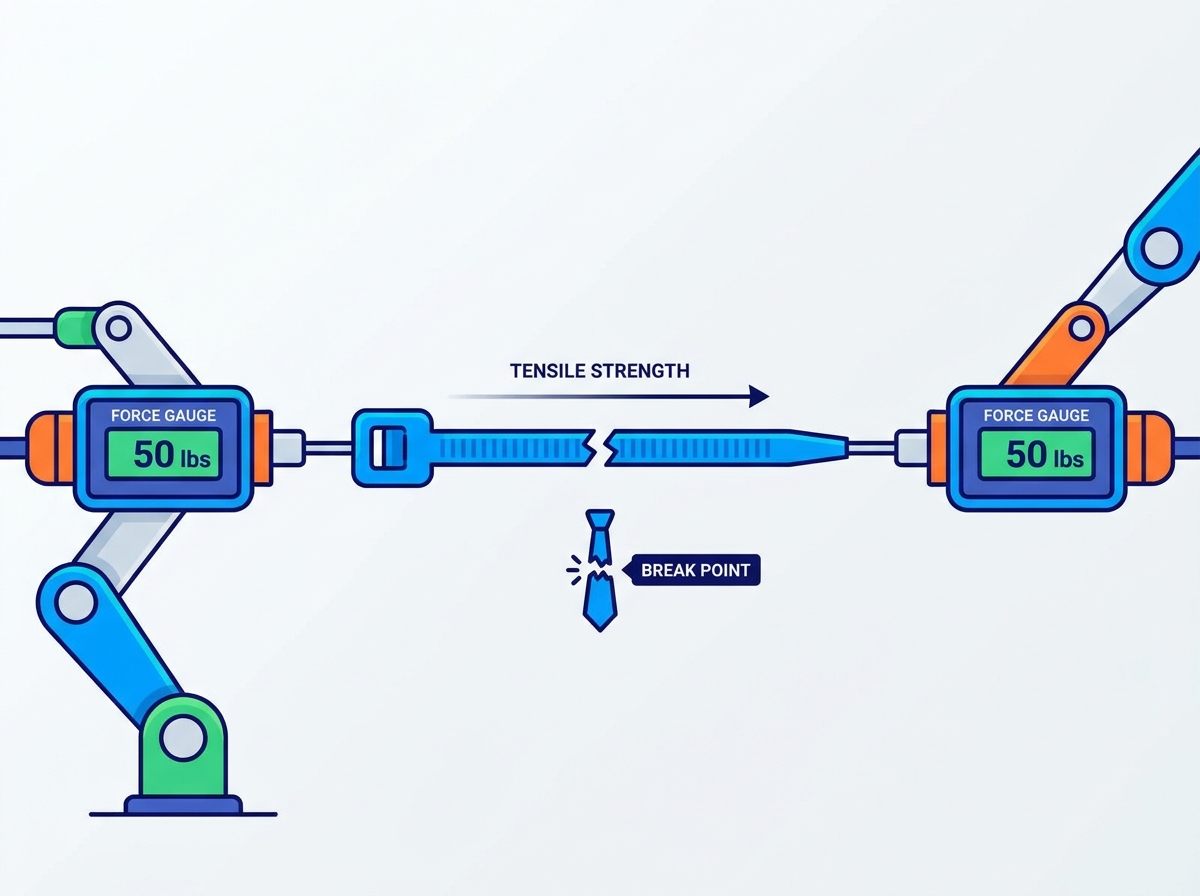
Loop Tensile Strength is the standardized measurement used across the fastener industry. It determines the exact amount of applied force a closed loop can endure before it fails. Failure typically manifests in one of two ways. Either the locking pawl, which is the microscopic ratcheting mechanism inside the head, breaks under immense pressure. Or the strap itself snaps. Unlike straight tensile strength, which measures pulling a raw material from opposite ends, LTS tests the integrity of the locking mechanism and the strap working together as a unified mechanical system.
To guarantee safety and reliability, this metric is tested using rigorous methodologies established by organizations like Underwriters Laboratories and military specifications. During a standard test, a tie is secured around a split steel mandrel. A specialized testing machine, known as a tensometer, slowly pulls the two halves of the mandrel apart at a constant speed. This mimics the outward radial stress of a tightly packed wire bundle. The machine precisely records the exact amount of force at the exact fraction of a second the lock yields. This objective data establishes the official baseline rating for the product.
Understanding this metric is the crucial first step. It moves your operation away from hopeful guesswork and toward engineering-backed purchasing decisions. Selecting a tie based solely on its visual profile can lead to disastrous real-world results if the applied load exceeds the physical limits of the plastic.
Walk onto any modern construction site, peer into a high-density server room, or stroll through an automotive manufacturing plant. You will undoubtedly find nylon fasteners securing critical components. Their absolute dominance in the commercial market is not a coincidence. It is a direct result of advanced material science.
Specifically, the vast majority of high-quality zip ties are manufactured from Polyamide 6.6, commonly referred to as Nylon 6/6. This unique polymer is globally renowned for its exceptional mechanical strength, high rigidity, and excellent resistance to wear and abrasion. The molecular structure of Nylon 6/6 allows it to be injection-molded into highly precise, microscopic shapes. This includes the serrated teeth of a strap and the intricate locking pawl, all without losing structural integrity. When the tie is tensioned, these teeth engage securely, providing maximum resistance against aggressive pull-out forces.
To truly appreciate the raw strength of this material, we must compare it against other common fastening alternatives. Polypropylene is often chosen for environments requiring high chemical resistance against specific acids. However, its molecular structure is significantly softer. Consequently, polypropylene lacks the raw load-bearing capacity of Nylon 6/6. In contrast, stainless steel fasteners are undeniably stronger than any plastic alternative. They are capable of withstanding massive physical loads. Yet, stainless steel is expensive, highly rigid, and can easily slice into softer wire insulation if not installed with absolute precision. Nylon bridges this gap. It offers the most versatile, cost-effective strength for approximately 90 percent of standard commercial applications.
Selecting the correct product requires matching the standardized pound-force rating to the specific physical demands of your application. As an engineer evaluating fastening systems, I rely on strict dimensional and strength parameters. Below is a comprehensive breakdown of standard strength categories, detailing their specifications and ideal use cases based on industry-standard CHS Plastics manufacturing data.
| Strength Category | Tensile Strength Rating | Typical Strap Width | Ideal Engineering Applications |
|---|---|---|---|
| Miniature | 18 lbs | 2.5 mm | PC cable management, delicate electronics, low-voltage networks. |
| Intermediate | 30 - 40 lbs | 3.6 mm | Lightweight retail signage, inventory packaging, household appliance cords. |
| Standard | 50 lbs | 4.8 mm | Everyday electrical bundling, automotive wiring harnesses, general facility organization. |
| Heavy-Duty | 120 lbs | 7.6 mm | HVAC ductwork suspension, heavy equipment components, temporary outdoor fencing. |
| Extra Heavy-Duty | 175 - 250+ lbs | 9.0 mm+ | Massive steel pipe bundles, agricultural weight suspension, high-stress structural supports. |
The 50 lbs tensile strength tie remains the undisputed baseline of the fastener industry. When a generic zip tie is mentioned in a commercial setting, it is almost always a 4.8mm wide specification. Conversely, engineered specifically for demanding physical environments, heavy-duty nylon cable ties feature significantly wider and thicker straps. This increased surface area, combined with a robust locking head, provides a loop tensile strength ranging from 120 to over 250 lbs. These fasteners are mandatory for heavy industrial loads.
A fastener rated for 50 lbs in a pristine laboratory setting may fail to perform to that standard if exposed to harsh external conditions. Real-world environments can severely compromise the molecular structure of Nylon 6/6, leading to premature snapping. Understanding these environmental variables is critical for selecting specialty blends when necessary.
Standard polyamide is highly sensitive to temperature extremes. In freezing environments, Nylon 6/6 can pass its glass transition temperature, causing the material to become brittle. If a frozen tie is subjected to sudden movement or a sharp impact, its tensile strength drops dramatically, and it will shatter. For winter construction or commercial refrigeration applications, engineers must specify cold-resistant nylon cable ties formulated with distinct chemical additives. These maintain flexibility in sub-zero temperatures. Conversely, excessive ambient heat can cause standard nylon to soften, slowly stretching the strap and reducing its holding power over time.
Furthermore, ultraviolet radiation remains one of the most common causes of outdoor fastener failure. When standard clear or white ties are exposed to direct sunlight for prolonged periods, UV photons trigger photo-oxidation. This chemical breakdown rapidly degrades the polymer chains. It turns the plastic yellow, makes it brittle, and drastically reduces its tensile capacity. For any exterior application, buyers must insist on UV-resistant black nylon cable ties. These specialized products are manufactured with carbon black. This crucial additive absorbs UV light and shields the underlying polymer structure, ensuring long-term strength outdoors.
In addition, Nylon 6/6 is naturally hygroscopic. This means it constantly absorbs and releases moisture depending on the surrounding humidity. This trace moisture acts as a natural plasticizer, giving the tie its characteristic toughness and flexibility. If the environment is excessively dry, the nylon loses its moisture, becomes brittle, and its tensile strength is instantly compromised during installation. Maintaining an optimal moisture balance is the secret to peak performance.
Based on recent manufacturing analyses, the global demand for specialized, high-tensile fastening solutions is surging. This shift is being driven largely by the rapid expansion of the renewable energy sector and electric vehicle manufacturing. Solar farms, wind turbine installations, and high-voltage wiring harnesses require fasteners that not only boast an exceptionally high baseline tensile strength but can also maintain that strength over decades of extreme temperature fluctuations and dynamic vibrations.
Consequently, the industry is witnessing a distinct move away from one-size-fits-all plastics. Manufacturers are heavily investing in advanced, application-specific polymer blends. We are seeing the introduction of highly engineered polyamides that offer enhanced UV stabilization, superior flame retardancy such as UL94 V-0 ratings, and extreme chemical resistance. All of this is achieved without compromising their core pound-force ratings. This trend underscores a broader movement within commercial engineering. We are prioritizing long-term lifecycle reliability and safety compliance over initial, bottom-dollar procurement costs.
Selecting the correct fastener is a calculated engineering decision, not a guessing game. To prevent catastrophic failure and ensure longevity, you should follow a systematic, actionable approach when evaluating your strapping requirements.
The very first step is to accurately calculate the dynamic load. Do not just estimate the static weight. Calculate the outward radial pressure the tie will need to hold. If you are bundling heavy copper cables, calculate the total weight of the bundle per foot. Never guess the load. Rely on objective physical measurements to guide your selection.
In real-world applications, loads are rarely perfectly static. Wind shear, machinery vibration, thermal expansion, and accidental impacts introduce dynamic stress that can temporarily spike the force applied to the tie. Therefore, always adhere to the safety factor rule. Choose a tensile strength that is at least 30 percent higher than your maximum expected load. If your calculated load is 40 lbs, do not use a 40 lb tie. Immediately upgrade to a standard 50 lb tie to guarantee a safe operational margin.
When choosing extra-long straps, buyers often overlook the critical relationship between length, width, and strength. Longer ties are typically deployed to secure larger, heavier bundles, which inherently require higher tensile strength. A 36-inch tie rated for only 50 lbs will likely snap if wrapped around a massive pipe bundle. A wider strap distributes the clamping force over a larger surface area. This prevents the plastic from cutting into soft materials like wire insulation. Always match the strap width to the diameter and weight of your bundle.
Choosing a fastener based strictly on the lowest price per unit, without regard for loop tensile strength, is a dangerous false economy. The downstream consequences of failure can be incredibly severe.
The most pressing risk is physical safety. Imagine a scenario where a low-strength tie is used to secure overhead HVAC ductwork. A sudden failure will result in heavy metal materials plummeting from the ceiling. This poses a direct, lethal threat to personnel and causes catastrophic damage to the machinery below. Additionally, if ties securing high-voltage wiring harnesses snap, the loose wires can chafe against sharp metal edges, leading to short circuits or devastating electrical fires.
Beyond safety, buying cheap, inadequate ties inevitably leads to the financial drain of constant rework. Every time a fastener snaps, a technician must be dispatched to diagnose the issue, remove the broken plastic, and install a replacement. The cumulative cost of maintenance labor and the operational downtime associated with these repairs far exceeds the initial pennies saved by purchasing sub-standard products.
Even if you select the perfect pound-force rating, improper installation or poor storage can severely compromise the structural integrity of your fasteners. To extract the maximum performance from your fastening systems, adhere to these professional best practices.
First, proper installation tools are non-negotiable for commercial jobs. Pulling a tie tight by hand introduces wildly inconsistent tension. Human hands cannot accurately gauge the exact pound-force being applied. This often leads to abrupt jerking motions that cause microscopic fractures within the locking mechanism. Engineers highly recommend using a dedicated cable tie tensioning tool. These devices allow the user to set a specific tension threshold, pulling the strap tight to the exact desired pressure before automatically cutting the excess tail flush with the head. This guarantees a secure lock without over-stressing the material.
In addition, you must avoid the dangers of over-tightening. It is a common misconception that tighter equates to stronger. In reality, tightening a tie beyond its intended bundle diameter severely warps the locking head and permanently stretches the strap. This plastic deformation weakens the pawl's engagement with the serrations, drastically reducing the breaking strength. Secure the bundle firmly, but leave a microscopic margin of flexibility to accommodate thermal expansion.
Storage practices also play a massive role in maintaining strength. Because Nylon 6/6 relies on trace moisture for flexibility, improper storage will ruin a batch of ties. Imagine a technician leaving a bag of standard ties on the dashboard of a hot service van. The moisture will rapidly evaporate, rendering the ties brittle before they are even used. Always store your fasteners in a cool, dry, climate-controlled environment. Keep them sealed in their original plastic bags until the exact moment of installation.
Tensile strength remains the absolute most vital metric when selecting industrial fasteners. Standard nylon cable ties offer an incredibly versatile range of solutions. They provide reliable strength ratings scaling from a delicate eighteen pounds to heavy-duty options exceeding 250 pounds.
Matching the correct strength capacity and environmental resistance, such as UV stabilization or cold-weather adaptability, to your specific project is the only way to guarantee both safety and long-term longevity. Moving away from guesswork and embracing strict load calculations will save your operations time, money, and dangerous rework.
Do not leave your next major installation to chance. Evaluate your specific engineering requirements and source your fastening solutions from a trusted manufacturer. Visit CHS Plastics today to browse a comprehensive catalog of rigorously tested, high-quality nylon cable ties. Contact our dedicated engineering team to discuss the exact tensile strength required to secure your most demanding applications.
Yes, but it is crucial to understand the physics of load distribution. If you thread two ties together end-to-end, you only increase the overall length of the strap. The tensile strength remains equal to the rating of a single tie. However, if you wrap two separate ties side-by-side around the same bundle, you distribute the weight across both fasteners. While this effectively increases the overall holding power of the system, it does not mathematically double the tensile strength. Due to microscopic differences in installation tension, one tie will inevitably bear a slightly higher percentage of the load. If the load shifts, the tighter tie may reach its breaking point and snap, immediately transferring the entire load to the second tie, causing it to fail as well. It is always safer to rely on a single tie with an adequate tensile rating.
When evaluating absolute maximum strength across all materials, stainless steel cable ties are the strongest, capable of holding anywhere from 200 lbs to over 800 lbs. They are designed for extreme environments, heavy manufacturing, and aerospace applications. However, within the realm of plastic fasteners, Extra Heavy-Duty and Super Heavy-Duty nylon options are the strongest available. These specialized industrial plastics are engineered with significantly wider straps and reinforced locking heads, allowing them to safely secure loads ranging from 175 lbs to well over 250 lbs. For the vast majority of commercial applications, these heavy-duty plastic options provide more than enough strength while remaining highly cost-effective.
Yes, under certain environmental conditions, standard nylon fasteners can degrade and lose their rated tensile strength. The two primary culprits are ultraviolet radiation and moisture loss. When exposed to direct sunlight, UV photons cause photo-oxidation, a chemical process that breaks down the polymer chains, causing the plastic to become brittle and shatter under minimal stress. Additionally, prolonged exposure to extremely dry environments will cause the material to lose its internal moisture, resulting in severe brittleness. To prevent this degradation, proper selection is paramount, such as utilizing UV-stabilized black nylon for any outdoor application.
The primary difference lies in the physical dimensions of the fastener, specifically the cross-sectional area of the strap and the structural volume of the locking head. Tensile strength is directly proportional to the amount of material resisting the pulling force. A standard 50 lb tie is typically around 4.8 mm wide and relatively thin, making it highly flexible and perfect for small electrical bundles. In contrast, a 120 lb heavy-duty tie is usually about 7.6 mm wide and significantly thicker. The ratcheting pawl inside the head of a 120 lb tie is also much larger and deeper, allowing it to bite into the thicker strap with far greater surface area to support heavy industrial loads.
No, the addition of color pigments does not inherently weaken the molecular structure of the nylon. A red, blue, or green 50 lb tie will possess the exact same loop tensile strength as a natural white 50 lb tie straight out of the manufacturing mold. Colored fasteners are highly effective for indoor color-coding, such as identifying different network cables in a server room. However, standard colored ties lack carbon black, the crucial additive required for UV resistance. Therefore, while their baseline strength is identical indoors, colored ties will degrade and lose their strength much faster than UV-stabilized black ties if exposed to direct outdoor sunlight.
Testing requires a specialized tensometer and a split steel mandrel. The tie is secured around the two halves of the mandrel. The machine pulls the halves apart at a constant, controlled speed. It precisely records the exact force applied at the moment the locking mechanism yields or the strap snaps. This method replicates the outward radial pressure of a bundled cable system, providing an accurate, real-world strength rating.
Absolutely. Standard polyamide is highly sensitive to extreme temperatures. In freezing conditions, the plastic loses its flexibility and becomes brittle, meaning a sudden impact can shatter it well below its rated strength. Conversely, excessive heat softens the polymer, causing the strap to stretch and lose its gripping force. For extreme environments, you must select specially formulated cold-weather or heat-stabilized fasteners to maintain the rated tensile strength.

